FPIC
Free, Prior & Informed Consent
Communities have the right to be consulted — meaningfully and in advance — about decisions that affect their land, livelihoods and futures. Consent is a precondition, not an afterthought.
A clear, formal statement of the goals WACAM has held since 1998 — and the strategies that translate them into community-level work, court-rooms, and corridors of policy.
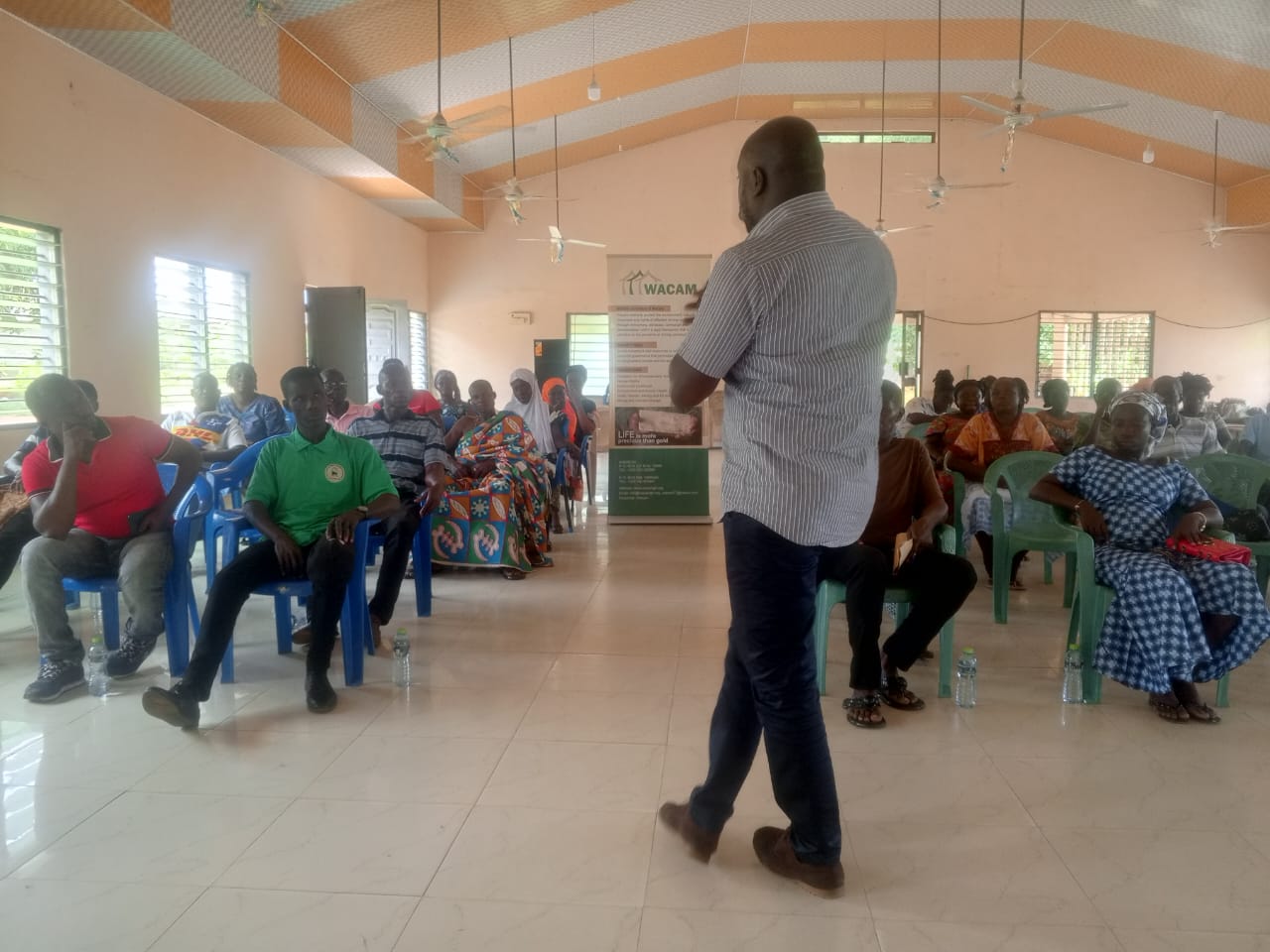
Wacam’s goal is to ensure that rural communities physically and or economically affected by the operations of transnational gold mining companies particularly in Ghana assert their right to effective and meaningful participation in decisions on mining policy reforms and manage their local natural resources necessary to sustain their livelihoods and hold governments accountable for securing these rights through good governance practices. Our goal is to ensure that companies and financial institutions who stand to benefit from extractive industries, demonstrate commitment in their policies and practices to respect the full range of communities’ rights including Free, Prior and Informed Consent (FPIC) and the Polluter Pays Principles (PPP).
Wacam's goal is to ensure that rural communities physically and/or economically affected by the operations of transnational gold mining companies — particularly in Ghana — assert their right to effective and meaningful participation in decisions on mining policy reforms; manage the local natural resources necessary to sustain their livelihoods; and hold governments accountable for securing these rights through good governance practices.
Communities have the right to be consulted — meaningfully and in advance — about decisions that affect their land, livelihoods and futures. Consent is a precondition, not an afterthought.
Companies and financiers that benefit from extraction must bear the cost of the harm it causes — to water, soil, air, and the people who live there.
A community that can name the law it has been denied is a community that has begun to recover that law. WACAM principle
Build the legal literacy and civic capacity of mining-affected communities so residents can themselves articulate, defend, and enforce their rights when those rights are threatened by extractive operations.
Identify, file, and support cases that establish or clarify legal precedents affecting the rights of communities in mining-impacted regions — both as direct counsel and via amicus briefs.
Engage with Parliament, the Minerals Commission, the EPA, EITI Ghana, and partner regulators on legislation, regulation, and enforcement affecting the extractive sector.
Produce and disseminate independent research that documents the lived impacts of mining, fills evidence gaps that regulators rely on, and trains journalists to cover extractive issues responsibly.
Work alongside Oxfam, the Ford Foundation, GIZ, OSIWA, CARE, Trust Africa, EITI Ghana, and a broad set of local and continental allies. Coalition is how a small NGO punches above its weight; WACAM has practised it deliberately for nearly three decades.
